SMC 資料庫
Expert Reaction: Status of Coral Reefs 2025 report
COP29、氣候峰會、碳交易、氣候融資、調適、聯合國氣候變遷綱要公約、UNFCCC
科技媒體中心、劉哲良、趙家緯、王寶貫、許晃雄
議題背景:
The Global Coral Reef Monitoring Network has released Status of Coral Reefs of the World: 2025, the seventh edition of the report and the most comprehensive assessment of the world’s coral reefs to date. The report compiles trends from 1980 to 2024, drawing on 21.1 million observations from 87,299 surveys covering 36,886 sites in 124 countries and territories, roughly three times the volume of data in the previous edition, with independent external scientific review arranged separately by the International Coral Reef Society.
The report finds that, compared with the 1980–2009 historical reference period, global hard coral cover in 2020–2024 declined by about 9.5% in relative terms, with the 2024 global average estimated at about 25.8%. The decline has not been a smooth downward line: cover fell sharply during the four global bleaching events of 1998, 2010, 2016 and 2023–2024, recovered in part afterwards, and fell again with the next heatwave.
The report also finds that the ten monitored regions of the world are not moving in the same direction. The East Asian Seas hold the largest coral reef area of any region, and their hard coral cover has been relatively stable over the past forty years. But the fourth global bleaching event, declared in 2023, brought the region’s median cover down from 32.2% to 29.0%, a loss of 3.2 percentage points in a single year, and the report specifically notes that since 2020 the decline has been most pronounced in the Kuroshio subregion, to which Taiwan belongs.
The Taiwan national report shows that Taiwan’s coral reefs have been monitored with standardised methods since 2009. Hard coral cover has remained flat at low to moderate levels over the long term, with no clear rebound, while macroalgal cover has risen steadily since the late 1990s, an early warning sign that the reefs could shift toward an algae-dominated ecosystem.
Differences within Taiwan are also large. Green Island and Orchid Island still maintained coral cover above 50% as of 2022 and were rated as excellent, while the Northeast Coast and Xiaoliuqiu were classed as critical, and Shanyuan in Taitung recorded 60% silt cover in 2020. The Taiwan research team acknowledges that “flat” cover admits two opposite readings: a display of ecological resilience, or a reef trapped at a low baseline and unable to recover. The years 2023 to 2024 were the harshest period since records of coral cover in Taiwan began, with the global bleaching event compounded by physical damage from typhoons Gaemi and Krathon.
SMC Chinese-language summary of Status of Coral Reefs of the World: 2025: https://reurl.cc/Gg5kqd
Status of Coral Reefs of the World: 2025 release: https://gcrmn.net/2025-report/
Shih Hsin University report The Pulse Beneath the Sea (《海底的脈搏》): https://reurl.cc/yWDybl
(Produced by the Shih Hsin University The Pulse Beneath the Sea team; contact: Wan-Yun Hsiao (wanyunbella@gmail.com))
To help the public better understand how far global coral cover has fallen, whether the East Asian Seas and Taiwan are declining as well, the methods and limitations of this report, whether falling coral cover will affect fisheries and coastal protection, and what is still missing from Taiwan’s monitoring system, the Taiwan Science Media Center invited experts in coral reef ecology and marine conservation to offer their views.
Expert Reaction
28 August 2026
Chaolun Allen Chen, Research Fellow, Biodiversity Research Center, Academia Sinica
(Author, East Asian Seas and Taiwan chapter of this report)
Q1. What does the report cover, and how should we read it? Taiwan’s monitoring data now form part of a global assessment. What does that mean for coral research in Taiwan?
Status of Coral Reefs of the World: 2025 is the largest, longest and most integrated assessment of coral reef health yet produced. It draws on roughly three times the data of the 2020 edition. Regional chapters were written jointly by local data providers and experts, and the global report passed external scientific review by the International Coral Reef Society. In effect it is a health check on the world’s reefs, built by placing four decades of monitoring data into a single analytical framework.
The clearest global message: compared with the 1980 to 2009 reference period, hard coral cover in 2020 to 2024 fell by about 9.5% in relative terms, and the global average for 2024 is estimated at about 25.8%. One point needs emphasis. A 9.5% decline is a relative decline, not a drop of 9.5 percentage points.
The decline has not been a smooth line. Cover fell sharply during the four global bleaching events of 1998, 2010, 2016 and 2023 to 2024, recovered partially, then fell again with the next marine heatwave. This produces a stepwise decline. Each global bleaching event carried a relative loss of roughly 6.5 to 9.9% of hard coral cover worldwide.
Global averages do not decide the fate of every region. Of the ten regions covered by the Global Coral Reef Monitoring Network, the Caribbean, the Persian Gulf and Arabian Sea, Australia and the Pacific show clearer long-term decline. The East Asian Seas, Brazil, the Eastern Tropical Pacific and the Red Sea and Gulf of Aden do not show decline on the same scale. The report states that hard coral cover in the East Asian Seas has shown considerable long-term stability over the past forty years.
Taiwan’s inclusion matters for two reasons. First, it shows that a dataset built by long-term public participation, once scientifically processed and analysed by research institutions, can move from local scale into regional and then global assessment. Taiwan’s long-term reef data come mainly from the Taiwan Coral Reef Census, run for many years by the Taiwan Nature and Environmental Information Foundation, formerly the Taiwan Environmental Information Association. The Biodiversity Research Center at Academia Sinica and the Green Island station of the NSTC Taiwan Long-Term Social-Ecological Research facility then compiled and analysed the data, which were passed to the East Asian Seas subregion of the monitoring network and finally entered the global assessment.
Second, a shared baseline lets us separate three things: which changes are the common signal of global warming, which are characteristic of the East Asian Seas, and which come from Taiwan’s own hydrology, typhoons, coastal pollution, fisheries, tourism and other local pressures.
So the report’s main message for Taiwan is that East Asia remains a region with hope, but not a safe zone insulated from climate change. What matters now is to use long-term monitoring, while that capacity for recovery still exists, to understand why it exists, where it exists, and how management can preserve it.
Q2. Are the data sources and methods sound? What limitations should readers keep in mind?
Judged as long-term ecological monitoring at global scale, the methods are sound and rigorous. The report does not pool more than eighty thousand surveys into a single average. It first accounts for differences between countries, decades, research programmes and survey methods. Raw data pass through standardisation and quality control, and both the integration process and the R code are publicly archived, so data providers and outside readers can trace what was changed and how it was combined.
A second strength is that the report avoids letting whichever country surveys most decide the global trend. Australia and similar places have abundant long-term resources, with many fixed sites and repeat surveys, while some developing countries and remote islands have far less. Averaging by survey count would map the distribution of research resources rather than the distribution of the world’s reefs. The report instead weights by a 10 by 10 kilometre grid, spatial subdivisions and actual reef area, then aggregates upward to the global scale, so heavily surveyed places do not dominate the result.
Statistically the report uses a Bayesian hierarchical model, reports estimates as medians with 95% credible intervals, and grades the strength of evidence for increase or decline by posterior probability. For data this large and this heterogeneous, that is a relatively robust approach.
Even so, a large database has limits. The first is that data remain uneven in time and space. Many regions had no stable monitoring in the 1970s and 1980s, so the report excluded 1973 to 1979 and 2025 from the main trend figures for lack of data. Historical baselines also differ in quality between regions. Hard coral cover in South Asia and the Western Indian Ocean appears to increase over the long run, but the report itself cautions that early data are sparse and that some baseline years fall just after severe disturbance. A different historical dataset could yield a different reading of how much recovery has occurred.
The second limit is scope. This is an assessment of benthic cover, not of full reef ecosystem function. Hard coral cover is used widely because it is easy to measure, has the deepest historical record and is easy for the public to grasp. But cover cannot represent species composition, coral recruitment, three-dimensional reef structure, fish functional groups or ecosystem services. The monitoring network notes that taxonomic resolution and choice of indicators vary between regions, which makes it hard to assess anything beyond cover at global scale.
Taiwan’s 2024 bleaching data need the same care about scale. That survey covered 8 regions and 43 sites, mostly at around 5 metres depth, with three 15-metre transects per site and bleaching scored from underwater photographs. It is a valuable synchronous national dataset. But it reflects shallow-water coral assemblages, and survey dates ran from late July to late October, so it should not be read as a complete survey of every location, every depth and every coral species at one moment in time.
The best way to use this report is as the most complete long-term global evidence base humanity has assembled, rather than treating any single modelled figure as the only truth. The global report gives us large-scale trends. Real conservation and management still depend on long-term monitoring at regional and local scale.
Q3. What existing understanding does the report add to or correct?
The report’s main contribution is to show, with more than forty years of global data, that reef change is a repeating cycle of damage, recovery and further damage. Reefs retain a considerable capacity to recover on their own. What has changed is that disturbance now arrives more often, and the time available for recovery is disappearing.
Between the four global bleaching events, cover did recover: about 6% in relative terms between 2017 and 2019. That proves a reef struck once by a marine heatwave is not necessarily beyond recovery. The real concern is the shrinking recovery window. If a reef needs ten years to recover but the next major heatwave arrives within three to five, the problem is not that it lacks the capacity, but that it lacks the time to grow, reproduce, recruit new corals and rebuild its assemblages. Between 2019 and 2025, more than a quarter of the world’s reefs experienced heat stress sufficient to cause bleaching at least four times. Bleaching at close to annual frequency is what should worry us most.
The second correction concerns the assumption that a global average describes the fate of all reefs. Cover has not moved in the same direction across the ten regions, and two are higher than the report’s reference period. Ocean warming is the shared pressure, but local marine conditions, typhoons, crown-of-thorns starfish, pollution, fisheries, coastal development and the composition of the ecosystem itself still strongly shape the outcome.
The East Asian Seas illustrate this. Over the past forty years the region’s long-term median hard coral cover has been about 30.3% and broadly stable. Cover fell after the first global bleaching event in 1998, recovered through the 2000s to about 32.0% by 2009, dropped to about 27.0% after the second event in 2010, then rose again. Comparing the 2010s with 2020 to 2024, regional cover actually increased by about 3.1 percentage points, a relative gain of 11.1%. That is why I still regard East Asia as a region of hope.
Hope is not safety. The fourth global bleaching event pushed hard coral cover in the East Asian Seas down by about 3.2 percentage points in 2024, to about 29.0%. The report is clear that we do not yet know whether this decline will reverse as it has over the past two decades, or whether it marks the start of a lasting change.
A third advance is that new long-term data have revised some earlier regional judgements. With more historical data, the 2025 edition markedly reduced uncertainty in estimates for 1980 to 1995. Earlier regional reports had described hard coral cover in parts of the Pacific as broadly stable; reanalysis with more data and a different time frame shows a long-term decline from 1980 to 2024. The report is careful to say this does not mean the earlier work was wrong and the new work right. Different volumes of data, time and spatial ranges, classification schemes and statistical models can legitimately produce different estimates.
So what this report really changes is not only the question of how much coral the world has lost. It moves us to ask why some reefs still resist and recover under the same warming, while others steadily lose that ability.
That is the scientific question Taiwan should invest in next.
Q4. What climate risks does the report imply for Taiwan’s reefs? What would falling coral cover mean for daily life?
Reading the global report alongside Taiwan’s 2024 bleaching survey, Taiwan faces three risks at once: stronger heat stress, more frequent marine heatwaves, and a shrinking recovery window between disturbances.
During the fourth global bleaching event in 2024, accumulated heat stress in northern Taiwan peaked at about 20.47 Degree Heating Weeks and in southern Taiwan at 22.01, with averages of 13.81 and 15.50 respectively. These are far above the 4 to 8 Degree Heating Weeks normally used to flag risk of mass bleaching.
Taiwan has recorded clear bleaching in 1998, 2010, 2016 to 2017, 2020 and 2024. In 2020 about 52% of corals came under marked heat stress and close to 31% died or suffered severe tissue damage. In 2024 several areas exceeded 20 Degree Heating Weeks. The conclusion of Taiwan’s bleaching chapter is plain: what used to be sporadic bleaching is becoming more frequent and, in some areas, more severe, while the time reef assemblages have to recover keeps shrinking.
What makes Taiwan distinctive, and what management should watch most closely, is the clear regional variation. In that same 2024 event, 100% of corals surveyed at Shitiping were healthy or only lightly bleached, as were 98.9% at Chaojing and 96.86% at Longdong. At Zipeng on Green Island, by contrast, 91.43% of corals reached moderate to extreme bleaching, along with about 80.27% at Houwan in Kenting, 65% at Nanliao on Green Island, 61.37% at Guiwan and 58.01% at Shilang. The same marine heatwave produced entirely different outcomes in different Taiwanese waters.
Taiwan’s bleaching chapter attributes these spatial differences to local currents, depth, physical oceanographic conditions and the composition of coral assemblages. The question for the future is therefore not simply whether Taiwan will bleach. We should be asking which places are most vulnerable to heat damage, which fail to recover after repeated disturbance, and which stay relatively healthy even in the most extreme years. The last group may prove to be resilience hotspots, or temporary climate refugia.
On what declining cover means for daily life, another oversimplification needs avoiding. A 10% fall in coral cover does not mean reef function falls by 10% as well. The report notes that even with global average hard coral cover at about 25.8% in 2024, many reefs may still sustain carbonate production, biodiversity, fisheries, coastal protection and cultural value. The real concern is when coral loss coincides with shifts in species composition, loss of three-dimensional reef structure, failed recruitment and declining functional fish, because that is when overall ecosystem function begins to go.
Close to a billion people worldwide live within 100 kilometres of a coral reef, and a healthy reef structure can dissipate up to about 97% of wave energy. These figures cannot be converted directly into a loss in dollars for Taiwan. But the future of Taiwan’s reefs is not only about whether divers still see beautiful corals. It reaches into fisheries, tourism and water recreation, coastal protection, biodiversity, and the livelihoods and culture of island and coastal communities. These are precisely what Taiwan needs to bring into long-term social-ecological monitoring.
Q5. Given these data, what can Taiwan do in management terms that would actually work? Where is the biggest gap?
The most important part of this question is not only what conservation measures Taiwan could add, but the six future priorities the report sets out at its close. Those six point directly at one thing: whether reef conservation can be governed on evidence depends on whether monitoring data are long-term, stable, standardised, comparable and integrable, and whether they finally reach management decisions.
The report’s six directions are:
- increase and stabilise funding for reef monitoring;
- expand the temporal and spatial coverage of monitoring;
- advance standardisation of monitoring methods across regions;
- improve the findability, accessibility, interoperability and reusability of data while respecting data ownership;
- raise taxonomic resolution and add indicators beyond coral cover;
- integrate ecological data with social and economic data so that monitoring can support interpretation and governance of the whole social-ecological system.
Measured against these six, the issue Taiwan most needs to face is this. The reef data with the longest span and widest coverage come largely from the Taiwan Coral Reef Census, a citizen science programme. Without years of sustained effort by citizen scientists, volunteer divers and civil society organisations, Taiwan could not have built the long-term record that now feeds the East Asian Seas subregion.
Citizen science is designed so that many people can take part, which means methods must stay relatively simple, and observer differences can arise between years, surveyors and sites. In taxonomic resolution, positional accuracy, consistency of sampling design and data variability, such records are harder to match to the high resolution the next stage of global monitoring requires. We have to be candid about that limit.
Taiwan’s next step is a national, long-term, standardised reef monitoring system. This would not replace the Coral Reef Census. It would add a layer of high-resolution professional monitoring on top of the citizen science foundation: fixed plots, sites, transects and belts across Taiwan’s different coral ecoregions, using consistent survey methods, photographic sampling, classification criteria, quality control and analysis. Only then, ten or twenty years from now, can we be sure that data from different decades are measuring the same thing. Without fixed sites, fixed transects and a long record, we cannot tell whether the differences seen in 2024 were a one-off, or genuinely reflect different resistance and recovery capacity between areas.
Standardised monitoring must also move beyond hard coral cover, as the report itself stresses that cover alone cannot judge reef health and resilience. Taiwan should progressively add coral species composition and size structure, recruitment, mortality, three-dimensional habitat structure, functional fish groups, water temperature and marine heatwaves, water quality, sedimentation, and the socioeconomic and resource-use indicators that are needed. Only then can we move from how much coral there is to whether this reef still functions, and whether it can recover after disturbance.
The Ocean Affairs Council already runs marine environmental and ecological monitoring, and that is an important foundation. But measured against the global standard this report calls for, coral reef ecosystems still need more stable, more specialised institutional and financial support that can run for decades. Reefs should not be a subordinate item within general marine monitoring. Given their high climate sensitivity and the ecological contrast between northern and southern Taiwan, they warrant a dedicated long-term monitoring framework.
The Taiwan Long-Term Social-Ecological Research facility supported by the National Science and Technology Council, and the Green Island station in particular, points to another important direction. It brings corals together with environment, ecology, fisheries, tourism and local society under one long-term observation programme. Since the Green Island station was established in 2022 it has integrated more than 6 million environmental, fishery, tourism and community records, and has begun analysing how water quality, tourist activity, fishery change, marine heatwaves, typhoons and reef condition relate to one another. That answers the last and most forward-looking of the report’s six priorities: ecological monitoring cannot be separated from human society.
Such monitoring must also draw in the knowledge accumulated by residents, fishers, fishermen’s associations, dive operators and other local stakeholders. The ideal architecture combines professional long-term monitoring, citizen science and local knowledge. Professional monitoring supplies comparable high-resolution science, citizen science extends coverage in time and space, and local knowledge fills in the long-term environmental and resource changes that fixed plots cannot see.
Finally, all of this has to turn into action. Monitoring exists to answer whether a place is getting worse, what pressure is driving it, and which management measures actually work. If data show water quality declining over years, the response belongs with sewage and land-based pollution control. If key functional fish keep falling, it belongs with fisheries management. If certain places keep showing higher resistance and recovery after repeated heatwaves, they should become conservation priorities. If a restoration or protection measure has not delivered after several years, monitoring should trigger a rethink. As the report puts it, only long-term standardised data allow management to shift from reacting after the event to adapting as it learns.
So if you ask where Taiwan’s biggest gap lies, my answer is this. Taiwan does not lack people willing to monitor corals. What it lacks is a national monitoring system with stable funding, run over the long term with fixed plots, fixed transects and consistent methods, capable of integrating professional science, citizen science, local knowledge and governance needs.
That system has to close a full loop: stable long-term funding, unified survey standards, fixed plots and long-term data, open and interoperable datasets, participation by citizens and holders of local knowledge, scientific analysis, translation of knowledge into policy, management and enforcement, evaluation of outcomes, and revision based on the data.
If Taiwan builds this, and combines it with the social-ecological integration and local participation the Taiwan Long-Term Social-Ecological Research facility is already attempting, we would be doing more than responding to the report’s recommendations. We would have a chance to build a long-term reef governance model worth learning from, in the largest coral reef region on Earth.
Sources
- Global Coral Reef Monitoring Network (GCRMN). Status of Coral Reefs of the World: 2025.
- Summary of coral bleaching from Taiwan during the 4th global coral bleaching event (Taiwan bleaching chapter).
- Long-term monitoring data from the Taiwan Coral Reef Census, Taiwan Nature and Environmental Information Foundation; data compilation and analysis by the Biodiversity Research Center, Academia Sinica, and the Green Island station of the NSTC Taiwan Long-Term Social-Ecological Research facility.
25 August 2026
Professor Colin Wen, Department of Life Science, Tunghai University
Q1: What is this report mainly about and how should we read it? What does it mean for coral research in Taiwan that Taiwanese monitoring data now forms part of a global report?
The report brings together long-term monitoring data from Taiwan and the East Asian Seas, and shows that corals in the region still display a degree of recovery capacity despite several episodes of large-scale bleaching. What has to be kept in mind is that a rebound in cover is not the same thing as full ecosystem recovery. From what I observe on actual dives, that recovery capacity has been declining as extreme heat becomes more frequent.
Taiwan’s inclusion in an international report is owed above all to Reef Check, the survey programme run for many years by the Taiwan Nature Foundation (formerly the Taiwan Environmental Information Association), and to the efforts of researchers here to connect with the international community. Behind that work is a group of volunteer divers who paid for their own certification, along with instructors and local dive operators, who have put in years of effort in their own time. That this valuable data has won international recognition reflects the selfless dedication of Taiwan’s diving community to the health of the ocean.
Q2: Are the data sources and methods used in this report sound, and what limitations should we be aware of?
The Global Coral Reef Monitoring Network is an authoritative international body with a rigorous review process for data sources and reliability. The 95% credible intervals reported for the data make the differences in trend between areas visible. On climate influences, typhoons do cause physical damage to corals, but a typhoon of moderate strength also brings a cooling effect that eases the threat of high-temperature bleaching.
As for limitations, international reports tend to use coral cover as a single indicator of reef health, and that can obscure shifts in the structure of coral communities. Diving practice in recent years has shown that many areas once dominated by branching corals have gradually shifted to encrusting or massive forms after bleaching. Such a shift barely registers in total cover figures, yet it profoundly alters the diversity and structural function of the reef ecosystem as a whole. Interpretation therefore calls for a closer look at the detail.
Q4: The survey shows very large differences in bleaching severity between survey sites in Taiwan. What is the main cause of those differences? And what does a shortening bleaching interval mean for coral communities?
My inference is that the differences in bleaching severity relate mainly to fine-scale coastal currents, such as deep cold-water intrusions or warm currents. This is based on the differences I have felt on my own dives and on discussions with local instructors. In addition, sites that have long been under human disturbance or high turbidity appear already to have selected for more resistant species, so their bleaching risk is comparatively lower.
That said, as the bleaching interval shortens from roughly once a decade to once every five or six years, corals meet the next period of extreme heat before they have had time to recover or to complete species succession. The result is heavy mortality among heat-sensitive species, a sharp drop in ecosystem diversity, and a decline in the organisms that depend on corals. Without an adequate supply of new recruits, reefs may ultimately be locked into a state from which recovery is difficult, as the warning from the Caribbean, still unrecovered today, suggests.
Q5: What can we infer from this report about the climate risks facing Taiwan’s coral reef ecosystems, and what impact would falling cover have on our lives?
Taiwan’s coral reefs face a compound climate risk, the double blow of frequent high-temperature bleaching and extreme physical damage from typhoons. If coral cover keeps falling, the most immediate consequence is that habitat is destroyed, which in turn reduces marine life and fishery resources. Over the longer term, without a healthy and abundant underwater reef landscape, Taiwan’s diving and marine tourism industries will gradually lose their advantage, and local economies will feel the effect.
Q6: Faced with these data, what can Taiwan still do in management that would make a real difference, and where is the gap that most needs closing?
We cannot halt global warming overnight, but we can strictly control the sediment and sewage that coastal development discharges into the sea, designate protected areas and clear abandoned fishing nets, so as to raise the local resistance of corals.
The most urgent gap to close is binding legal penalties and real enforcement. Take the recent case at Shitiping in Hualien, where illegal fishing within three nautical miles left gear entangled on the coral reef: members of the public reported it repeatedly, yet enforcement agencies were rarely seen to act in time. Even when offenders were caught and fined, the penalty was usually set at the statutory minimum, NT$30,000 for example, which carries little deterrent effect. Unless enforcement is actually carried out and the penalty provisions are adjusted, it will be very hard to bring about any real improvement in Taiwan’s coral reef ecosystems.
Declared interests: I also take part in the long-term socio-ecological research (LTSER) programme run on Green Island by Dr Chaolun Allen Chen, an author of Status and Trends of Coral Reefs of the East Asian Seas. I have no other interests to declare.
25 August 2026
Dr Tung-Yung Fan, Research Fellow, National Museum of Marine Biology and Aquarium
Q1: What is this report mainly about, and how should we read it?
The Taiwan national report in the East Asian Seas chapter of Status of Coral Reefs of the World: 2025 was produced by Academia Sinica and the Trust in Nature Foundation through their participation in the Global Coral Reef Monitoring Network. It sets out the monitoring methods and sites used in Taiwan, together with hard coral and macroalgal cover by year and by depth, the status of each area and the main threats it faces. It also shows what sustained monitoring by civil society, and engagement with the international community, have achieved.
The Ocean Conservation Administration has likewise released two nationwide surveys: the Survey of Major Marine Ecosystems in Taiwan’s Waters, 2023–2024, by National Taiwan University, and the Coral Monitoring Survey Project, 2022–2023, by the National Museum of Marine Biology and Aquarium. The three reports differ in scale, in the placement of survey stations and in method, and should be read against one another if we are to see Taiwan’s coral resources, and the state of their conservation, in full.
Q2: What are the most notable scientific findings and evidence to come out of coral reef monitoring in Taiwan?
All three reports point to the same finding: Xiaoliuqiu, a coral reef island, has the lowest hard coral cover of any area surveyed, and macroalgae have replaced coral as the dominant group there. This indicates a seriously degraded ecosystem.
The main pressures behind reef decline include the loss of algae-grazing animals to overfishing; land-based wastewater and sediment, which encourage algal growth; inappropriate and excessive tourism; and intensifying climate change impacts. Since 2020, Taiwan has been hit roughly every two years by a marine heatwave severe enough to cause mass coral bleaching. Typhoon swell, heavy rain and mudflows add further damage to corals.
Q3: What would falling hard coral cover mean for our daily lives, and what can be done in management that would actually make a difference?
Reef-building corals are the core builders of a high-value ecosystem: they accrete reef structure, protect the coast, sustain fishery resources, provide habitat for other species and support tourism. Once corals decline substantially, reef accretion, three-dimensional habitat and ecosystem services decline along with them.
Beyond maintaining standardised monitoring and evaluating how well pollution reduction, fisheries management and recreation management are working, Taiwan needs to develop the science of coral reef restoration ecology. That means removing the sources of stress on corals first, protecting heat-tolerant corals and healthy reef areas, and combining natural coral recruitment with propagation, transplantation and monitoring, using coral survival, growth, reproduction, community structure and ecological function to verify whether the work is effective. The aim is to help coral reefs adapt to the impacts of climate change, and to advance a sustainable relationship between people and nature.
Declared interests: None.
Main sources:
Survey of Major Marine Ecosystems in Taiwan’s Waters, 2023–2024 (《112-113年臺灣海域重要生態系調查》): https://www.oca.gov.tw/ch/home.jsp?id=654&parentpath=0,299,652&mcustomize=research_view.jsp&dataserno=202411140001
Coral Monitoring Survey Project, 2022–2023 (《111-112年珊瑚監測調查計畫》): https://www.oca.gov.tw/ch/home.jsp?id=220&parentpath=0,2,219&mcustomize=research_view.jsp&dataserno=202401260010
25 August 2026
Professor Yu-Rong Cheng, Chair, Department of Fisheries Technology and Management, National Kaohsiung University of Science and Technology
Q1: What is this report mainly about and how should we read it? What does it mean for coral research in Taiwan that Taiwanese monitoring data now forms part of a global report?
The state of coral reefs in the East Asian Seas and in Taiwan looks stable, but there is a crisis beneath the surface. The latest reports from the Global Coral Reef Monitoring Network examine long-term change in coral reefs at two scales, the East Asian region and Taiwan. The regional report draws together 29 datasets, 5,360 monitoring sites and nearly 20,000 surveys to analyse change in coral and macroalgae across seven subregions of the East Asian Seas since 1983. The Taiwan national report uses long-term monitoring data collected since 2009 at 40 sites (8 non-reefal and 32 tropical reef sites) to set out the condition of Taiwan’s various coral ecosystems and the threats they face.
Although the East Asian Seas have been through several episodes of global mass bleaching, overall hard coral cover has remained relatively “stable”, and no phase shift from coral to macroalgal dominance has yet occurred. Actual change on the ground varies a great deal from place to place, however, and the “stability” of a regional average may lead us to overlook the marked decline under way in some areas. The finding is also a reminder that local environmental conditions, and the level of disturbance each area is exposed to, may play an important part in the resilience and recovery capacity of reef ecosystems. Future ecological surveys and monitoring will need to cover more ground, and to measure a finer set of variables.
Set against the regional trend, hard coral cover in Taiwan likewise shows no clear long-term increase or decrease, yet macroalgae are on an increasing trend. This “stability” may mean that Taiwan’s reefs still retain a degree of ecological resilience. It may equally mean that some reef areas have settled at a low baseline of coral cover and, under multiple disturbances and a rising trend in algae, now constitute an early warning of a potential phase shift, with the reefs unable to recover further.
What deserves our attention in these two reports is not that “coral cover still looks fairly stable”, but whether reefs still have enough time to recover from one disturbance after another. In the past, reefs seemed able to recover gradually once a disturbance had passed. But as heat, bleaching, typhoons and other human pressures grow more severe and more frequent, the next shock may arrive before the ecosystem has recovered. With the breathing space between shocks getting shorter, how many more can our reefs take? Long-term monitoring over the next few years will be critical in judging whether what we are seeing now is only a short-term fluctuation, or the beginning of a long-term shift.
Q2: Are the data sources and methods used in this report sound, and what limitations should we be aware of?
The data and methods in both reports are survey approaches in common international use and are sound in themselves, though each has its limits. The strength of the East Asian study lies in its long time span and large scale, but the survey methods are not uniform, and the resulting gaps in the data are a weakness. The Taiwan study uses a consistent survey method, but on a smaller scale. Both reports face problems of insufficient survey intensity and frequency, and of how representative the survey results are, although that does depend on the funding and manpower available. Another shared problem is that coral cover is the principal indicator in both reports. From an ecological standpoint, reef health also involves coral recruitment, mortality, colony size structure, species composition, disease, fish functional groups and grazing pressure from herbivores. There is only so much that coral cover alone can answer.
Q3: What existing understanding do the data, methods or conclusions of this report add to or revise?
On data and methods, the two reports highlight the importance of survey intensity and frequency. They also make the point that beyond coral cover, what really needs attention is whether coral communities are changing, and whether increasingly frequent disturbance is shortening the time reefs have to recover. On conclusions, the two reports revise the impression we have long held that corals worldwide are in decline and facing a phase shift; they show that despite considerable environmental disturbance, many reef areas are still working to repair themselves. They also revise the conventional view that only falling coral cover counts as degradation: reefs in the East Asian Seas have shown recovery capacity after repeated bleaching, but a regional average that looks stable may mask local decline, and coral cover that has not fallen does not mean the ecosystem is still healthy.
Q4: The survey shows very large differences in bleaching severity between survey sites in Taiwan. In your judgement, what is the main cause? And what does a bleaching interval shortening from roughly once a decade to once every five or six years mean for the recovery capacity of coral communities?
Environmental conditions differ between sea areas to begin with, and even within a single sea area there are microhabitat differences, so a certain amount of variation is a normal, natural phenomenon. It is the same point the Taiwan study emphasises: coral cover from different geographical areas should not be compared side by side.
Neither report has in fact gone as deep as the coral community level, so neither can answer the question of what this means for the recovery capacity of coral communities. On theoretical grounds, though, more frequent bleaching caused by marine heatwaves will certainly reduce the recovery capacity of coral communities and lengthen the time reefs need to recover. It will also change those communities, eliminating species with low heat tolerance, such as branching and foliose corals, and leaving the more tolerant ones, such as encrusting and massive corals. Those more tolerant species are typically slow-growing and unbranched in form, so we can expect the coral diversity and spatial complexity of reef ecosystems to become progressively more uniform.
Q5: What can we infer from this report about the climate risks facing Taiwan’s coral reef ecosystems, and what impact would falling reef cover have on our lives?
Of course we can. It comes down to marine heatwaves growing more frequent and the warming more severe; typhoons growing more frequent and more intense; and turbid water and sediment smothering brought by heavy rain. As for ocean acidification and cold-water damage, the signal is not yet visible.
Coral reefs are bound up, directly or indirectly, with every part of our lives, from food, clothing, housing, transport, education and recreation through to climate regulation, ecological maintenance, medicine and national defence. Their decline will have consequences on many fronts, which I will not go into here.
Q6: Faced with these data, what can Taiwan still do in management that would make a real difference, and where is the gap that most needs closing?
Taiwan has never been short of good recommendations when it comes to management; what it lacks is the resolve to carry them out. Pull out the recommendations experts have made over the years and you find that much of what can and should be done has already been said many times over.
As for the gap that needs closing, my emphasis is on the need for finer-grained research. Coral cover is a fast and important indicator, and it gives us a general sense of how much coral there is in a given place. But it cannot tell us which coral species are declining and which have disappeared; in other words, it cannot supply what ecology stresses, namely biodiversity, community and species composition. Yet that information is both a key indicator for judging ecological condition and the scientific basis for choosing which species to use in future reef restoration. Our research on this front is comparatively lacking, and that is precisely the research gap I think we need to close.
25 August 2026
Chuan-Ho Tang, Associate Professor, Department of Life Sciences, National University of Kaohsiung
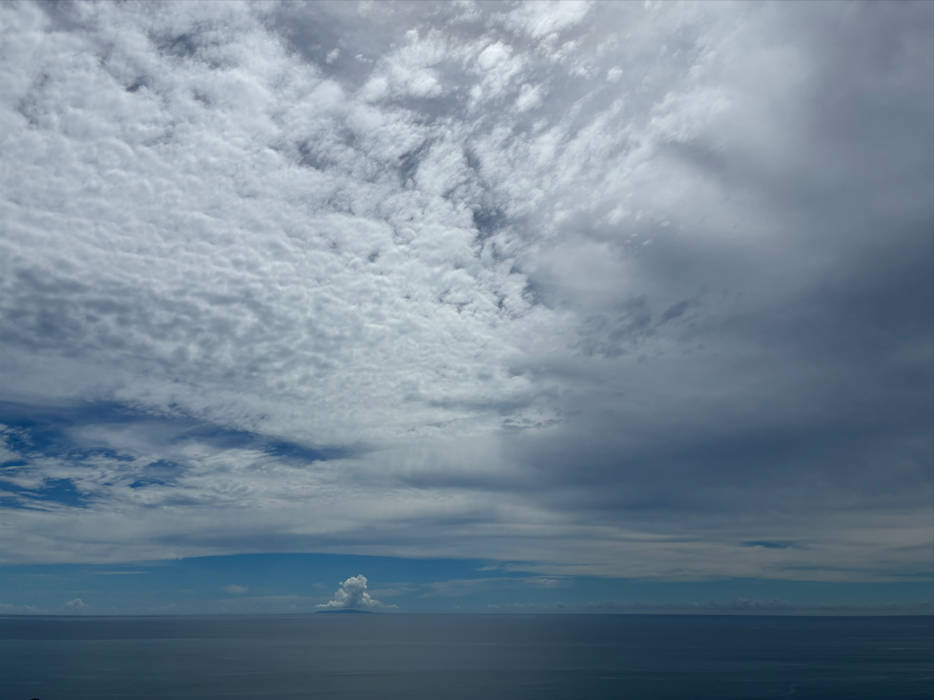
Coral reefs are widely distributed across the shallow tropical seawaters of the world. Although they cover only 0.2% of the total ocean area, they support over 25% of all marine species. They not only provide people with abundant living resources and ecosystem services, they are also hotspots for the release of marine bioaerosols, which help low-lying clouds to form (see figure below) and give reefs the capacity to regulate the microclimate. Yet coral reefs worldwide now face an extremely high climate risk of “total loss”.
The Global Coral Reef Monitoring Network (GCRMN) is a core action of the International Coral Reef Initiative (ICRI), and it is also the world’s eye on marine ecosystem monitoring in delivering the UN Convention on Biological Diversity. Its Status of Coral Reefs of the World report is, moreover, a core source of evidence for the Intergovernmental Panel on Climate Change (IPCC) in assessing the impacts of climate change.
The latest monitoring report for the East Asian seas shows that, at the macro scale, marine heatwaves remain the main cause of the sharp decline in hard corals. In periods without heatwaves, however, coral reefs have shown a year-on-year resilience and capacity for self-repair. The report further notes that changes in coral cover differ markedly between subregions, according to differences in local background environmental conditions. This underlines the importance of analysis at the subregional scale, which can make up for the blind spots created by broad-scale averaging. Taiwan’s own monitoring report echoes this case, and points specifically to the impact of local human activity as the decisive factor in the resilience and coral cover of Taiwan’s reefs.
Xiaoliuqiu is a coral island that has not been included in the Allen Coral Atlas, and the reason is plain. It is the inevitable result of environmental management on the island having gone unchecked in the past. This is not only a wound in Taiwan’s coral reef conservation, it should also bring a realisation. Is the environmental quality of the seawaters around Xiaoliuqiu not still rather good? Then why can the corals no longer grow, why have they disappeared? Is our understanding of the marine environmental quality needed to sustain “long-term” coral growth simply incomplete? The problem is environmental management, and Xiaoliuqiu can serve as a lesson for the main island.
Research has shown that coral health depends over the long term on the background conditions of the environment. Water quality, for example, can alter the symbiotic microbiome of corals, much as the gut microbiome works in humans, and this in turn determines how much health corals have in reserve when a heatwave strikes. Monitoring reports have clearly shown that, under mounting pressure from tourism development, the coral reefs of Taiwan’s main island are degrading. If we continue to follow past thinking on coral reef environmental management, then “total loss” will be the irreversible fate of Taiwan’s coral reefs.
Figure caption
Low-lying clouds forming above Green Island. As sunlight intensifies, corals in the waters around Green Island produce and release more bioaerosols, and this is key to the formation of the clouds overhead, as if the corals were raising a parasol for themselves and regulating the microclimate around them.